Vintage Pokémon Cards Worth Money: Find Rare & Graded Gems
This post contains affiliate links. We may earn a commission at no extra cost to you.
Vintage Pokémon cards are worth money, with rarity and condition being key factors. Rare cards include First Edition print runs, Promos, error cards, and Gold Stars. Graded cards, particularly PSA 10 vintage holos from sets like Jungle and Neo, have seen substantial growth, with a 1st Edition Base Set Charizard PSA 10 selling for $510,000.
Forget the wild, speculative swings of some modern releases; vintage is where stability meets steady growth, especially as we gear up for Pokémon’s monumental 30th anniversary.
What Makes a Vintage Pokémon Card Valuable?
The recipe for a valuable vintage Pokémon card isn’t rocket science, but it does require understanding a few key ingredients:
- Rarity: First Edition print runs, particularly from the Base Set, are scarcer than Unlimited. Promos, error cards, and cards with low “PSA pop” (population report) in high grades all fetch a premium.
- Condition: The single biggest factor after rarity. We’re talking about cards that are 20-25+ years old. Finding a Base Set Charizard with perfect centering, no whitening, and zero surface scratches is like discovering a time capsule. This is where grading comes in, separating the pack-fresh from the play-worn.
- Iconic Pokémon: Some Pokémon simply resonate more. Charizard is the undisputed king, but Lugia, Blastoise, Venusaur, Pikachu, Mewtwo, and other fan favorites from the early sets consistently draw top dollar.
- Set Significance: Cards from the original Base Set (especially 1st Edition Shadowless), Jungle, Fossil, Team Rocket, Gym Heroes/Challenge, and the Neo Genesis/Discovery/Revelation/Destiny sets are the bedrock of the vintage market. The EX era also boasts some incredible chase cards.
Top Vintage Pokémon Cards Currently Worth Money
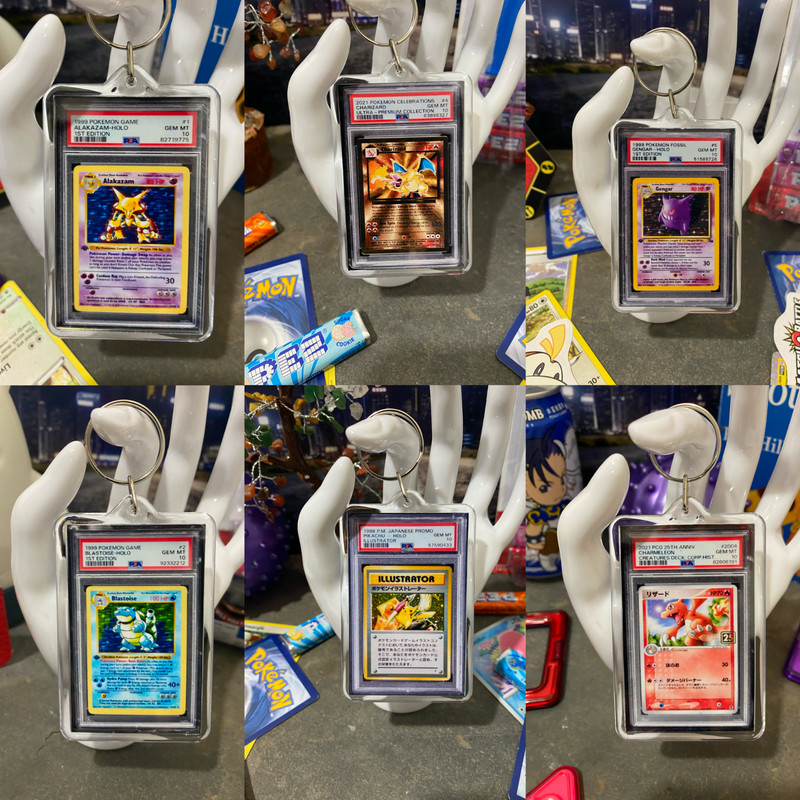
While the “holy grail” 1st Edition Base Set Charizard PSA 10 still tops the charts (with a recent sale reported at a staggering $510,000!), it’s not the only player. Many iconic holos across the early sets continue to appreciate.
Think about cards like:
-
1st Edition Base Set Holos: Blastoise, Venusaur, Raichu, Mewtwo, Zapdos.
-
Neo Genesis Holos: Lugia, the three starters (Typhlosion, Feraligatr, Meganium), and others like Espeon and Umbreon are notable, especially in high grades. A PSA 9 of one such card, for instance, saw an annualized gain of about 126% over nine months, from £180 raw in mid-2025 to £520 as a PSA 9.
-
Jungle & Fossil Holos: Cards like 1st Edition Snorlax (Jungle), Aerodactyl (Fossil), and Gengar (Fossil) are seeing substantial gains, particularly in PSA 10.
-
Team Rocket & Gym Holos: Dark Charizard, Dark Dragonite, Blaine’s Charizard, Sabrina’s Gengar - these are powerhouse cards with distinct artwork and high demand.
-
EX Era Holos & Gold Stars: While slightly newer, these cards are firmly in the “vintage” camp for serious collectors. Gold Stars, especially, are some of the rarest and most visually striking cards ever printed.
The market has a strong preference for high-grade, low-pop examples. Even some common-rarity vintage cards are seeing significant buyouts, like the 24-year-old Expedition Charmander which saw its market price jump following a buyout in late 2025. Similarly, Machamp from the Base Set 2-Player Starter Set spiked after a major buyout, likely fueled by 30th-anniversary anticipation. These indicate a broad, deep interest in all corners of the vintage market.
The Critical Role of Grading: PSA 9 vs. PSA 10 Performance

If you’re looking for where the real value lies in vintage, it’s almost always in graded cards, or “slabs.” And within the graded market, there’s a fascinating and increasingly important distinction between a PSA 9 (Mint) and a PSA 10 (Gem Mint).
Throughout 2025, PSA 10 vintage cards, particularly from sets like Jungle, Fossil, Team Rocket, Gym, and Neo, absolutely exploded. We’re talking substantial growth - some PSA 10s from Jungle and Fossil grew by over 150%! Take the 1st Edition Snorlax (Jungle) as an example: a PSA 10 of this card sold for $7,600 at the start of 2025 and ended the year at $21,600. That’s an incredible leap.
Conversely, many PSA 9 cards from these same sets saw more modest gains, or in some cases, even slight declines in Q4 2025. This divergence highlights a critical point for collectors and investors: the market is increasingly valuing perfection. That tiny bit of edge wear, that microscopic print line, that ever-so-slightly off-center image that drops a card from a 10 to a 9 can literally mean thousands of dollars in difference.
Here’s a snapshot of the performance disparity:
| Card Type & Grade | Example Set | Growth (Approx. 2025) | Notes |
|---|---|---|---|
| PSA 10 Vintage Holo | Jungle, Fossil, Neo | 150%+ | Strong demand for Gem Mint condition. |
| PSA 9 Vintage Holo | Jungle, Fossil, Neo | Modest gains / slight declines | Still valuable, but a clear gap from PSA 10. |
| PSA 9 1st Ed. “Low Pop” | Base Set, Neo | Significant gains | Scarcity (low pop) can boost PSA 9s. |
However, don’t write off PSA 9s entirely! “Low pop” PSA 9s, especially from 1st Edition sets with iconic Pokémon, are emerging as a significant long-term investment opportunity. The inherent scarcity of well-preserved older cards, combined with the difficulty of achieving even a 9 for many vintage examples, makes these low-pop cards highly desirable.
If you’re considering grading, ensure you protect your raw cards properly. Put prospective submissions in Ultra Pro Penny Sleeves 100 Count and then into Ultra Pro Semi-Rigid Card Holders or PJU Semi-Rigid Card Holders for shipping to PSA. These are crucial for preventing damage.
Collector Tip: When preparing cards for grading, always double-sleeve your most valuable cards. Use a KMC Perfect Fit Inner Sleeves first, then a standard sleeve like a Dragon Shield Matte Art Sleeves before placing them in semi-rigids. This adds an extra layer of protection against dust and corner dings.
Vintage vs. Modern: A Stable Investment for Long-Term Growth
This is a hot topic in collector circles, and the data is pretty clear: vintage cards are proving to be a more stable, long-term investment compared to the often-volatile modern market.
While modern chase cards can see explosive initial gains (we’ve seen 65-140% in the first 12-24 months!), they often moderate quickly. They’re subject to higher print runs and grading volumes, which can saturate the market and lead to corrections. Many in the community even anticipate a potential “hard reset” for some modern sealed products and singles.
Vintage, on the other hand, demonstrates steady appreciation. We’re talking an average Compound Annual Growth Rate (CAGR) between 22-35% for PSA 9-10 graded cards from Base, Neo, and EX sets. This consistent growth, year after year, makes vintage cards a cornerstone of a balanced collector’s portfolio. Many analysts are recommending a hybrid allocation: roughly 45% vintage graded, 40% modern sealed and graded chases, and 15% speculative raw cards. This strategy balances upside potential with crucial stability.
The reason for this stability is simple: they aren’t making any more of them. The supply is fixed, and shrinking over time as cards are lost, damaged, or permanently enshrined in personal collections.
How to Accurately Value Your Vintage Pokémon Cards
Valuing your vintage cards isn’t just guesswork; it’s about doing your homework. Here’s how I approach it:
- Identify the Card: Know the Pokémon, the set symbol, the card number, and if it’s 1st Edition, Shadowless, Unlimited, or a promo.
- Assess Condition: Be brutally honest. Is it raw? Is it graded? If raw, what would it realistically grade? Look for centering, surface scratches, edge wear (whitening), and corner condition. Even tiny flaws can drop a grade significantly.
-
Check Comparables (Comps): This is the most crucial step.
-
PSA Population Report: See how many of your specific card exist in your target grade (or lower if raw). Low pop in high grades means scarcity.
-
eBay Sold Listings: Filter by “Sold Items” and search for your card with its exact grade (e.g., “Charizard Base Set 1st Edition PSA 9”). Look at recent sales, not active listings.
-
Auction House Results: For high-value cards, major auction houses often have public records of past sales.
-
Third-Party Marketplaces: TCGPlayer or CardLadder can also provide valuable insights, especially for raw or lower-graded cards.
-
Always look for cards that match yours as closely as possible. A PSA 8 1st Edition Machamp is very different from a PSA 10 Shadowless Machamp.
Proper storage is important for acquired cards. Raw cards should be stored in a Vault X Premium Exo-Tec 9-Pocket Binder with Ultra Pro 9-Pocket Trading Card Pages, always double-sleeved. For display, an Ultra Pro UV One-Touch Magnetic Holder on a BCW Card Display Stand can be used to showcase cards. For bulk storage of graded cards, a BCW Graded Card Storage Box is suitable.
The Future Outlook for Vintage Pokémon: 30th Anniversary & Beyond
The horizon for vintage Pokémon cards looks incredibly bright, largely fueled by the approaching 30th anniversary of the Pokémon franchise in 2026. This isn’t just another year; it’s a massive milestone that’s expected to generate immense nostalgia and renewed demand for classic cards.
The community sentiment is overwhelmingly positive. We’re all buzzing with anticipation that the 30th anniversary will significantly boost the entire Pokémon TCG market. The Pokémon Company is already expected to release collector-focused anniversary sets with retro artwork and premium sealed products, which will only draw more eyes (and wallets) back to the origins of the game.
While some collectors are cautious about repeating the “hype waves” of previous years, the consensus is that growth will be strong and consistent, driven by a mature collector base and a stable investment outlook. What’s more, the definition of “vintage” is expanding. Those of us who grew up with Base Set are now seasoned collectors, but the next generation of collectors, who remember Black & White and XY eras from their childhood, now have disposable income and are seeking out those cards as their own “vintage.” This broadened interest ensures a continuous influx of new collectors into the older card markets.
The scarcity, the history, and the emotional connection these cards hold are undeniable. They aren’t just collectibles; they’re cultural artifacts, and their value reflects that.
Ready to Uncover Your Own Pokémon Riches?
Whether you’re looking to grade your childhood binder finds, invest in a classic piece of Pokémon history, or simply protect the cards you already own, the vintage Pokémon market offers a rewarding experience. The stability, the growth, and the sheer joy of holding a piece of your past make it an unparalleled area of the hobby.
Don’t let those potential gems sit hidden! Start researching, assessing, and protecting your collection today. If you’re serious about long-term preservation and display, consider investing in high-quality items like Ultra Pro One-Touch 35pt Card Holder for your key raw cards before they’re sent off for grading. Every step you take to understand and safeguard your cards increases their value and ensures they can be cherished for decades to come.
Start your vintage Pokémon journey today - the slabs are waiting!