Pokemon Card Investing: The Complete 2026 Collector's Playbook
This post contains affiliate links — we may earn a commission at no extra cost to you.
If you’re reading this, you’ve already figured out that Pokemon cards are more than nostalgia — they’re an asset class with real returns, real risk, and real data behind every move. I’ve been collecting Pokemon cards since 1999 (Base Set Charizard first, because of course). This page is the playbook I wish I’d had when modern-set Pokemon investing started getting serious around 2020.
Every number I cite here comes from eBay sold comps (30- and 90-day windows), PriceCharting market data, and PSA pop reports. There are no estimated prices on this site. If a card’s data isn’t verified, we don’t write about it.
In This Article
- What “investing” actually means in Pokemon
- The 5 variables that drive Pokemon card prices
- How to pick sets to target
- Raw-to-PSA-10 arbitrage math (the grading ROI formula)
- Pop report × demand analysis
- The biggest mistakes new investors make
- Storage, display, and selling
- Frequently Asked Questions
- Dive Deeper: Pokemon Guides + Reports
What Pokemon Card Investing Actually Means
Pokemon card “investing” is a spectrum. On one end, you’re holding sealed product (booster boxes, ETBs, tins) hoping aggregate set value rises. On the other, you’re grading individual singles hoping a perfect pull becomes a $2,000 PSA 10. Most serious collectors do both, but the math is different for each.
Sealed product is easier: buy at MSRP or below, wait, sell. Downside is modest (you’re not going to lose everything on a sealed Silver Tempest booster box), upside is slow (most sealed compounds 10-20% annually over multi-year holds). It’s a patience play.
Singles investing is where the math gets interesting. A card with a 4-6x raw-to-PSA-10 multiplier, a low pop count, and strong recent sold volume can produce 200-400% ROI inside 12 months — but it also requires you to actually pull or buy clean copies and send them to grading, which has its own costs, wait times, and failure risk.
This guide mostly covers singles investing because that’s where our data stack is strongest.
The 5 Variables That Drive Pokemon Card Prices
Every serious Pokemon investment decision comes down to five interconnected signals:
-
Character + art appeal. Charizard is always going to have a premium over a non-Charizard card from the same set. Umbreon, Pikachu, Mew, Mewtwo, Eevee, Gengar — they all carry character bonuses. Alt arts with stunning illustration rare (IR) and special illustration rare (SIR) art compound this further.
-
Raw supply (print run + open rate). Every modern Pokemon set is over-printed relative to demand on day one. The sets that become valuable are the ones that stop getting opened. Once sealed product becomes scarce, raw pulls become scarce, and PSA 10 pop caps.
-
Graded multiplier (PSA 10 ratio). This is our core investment number. A PSA 10 that sells for 4-6x raw means clean-condition card + $20 grading fee + a gem mint grade = real profit. A 1.5x multiplier means you’re barely covering fees.
-
Pop report scarcity. PSA pop of 40 on a PSA 10 vs. pop of 4,000 tells you everything about how easy the card is to grade. Low-pop cards with strong demand are where prices explode.
-
Sold volume (30-day velocity). eBay sold data tells us whether current prices reflect a handful of transactions (volatile, dangerous) or a steady stream (reliable, investable). 20+ monthly sales at a stable median is what you want.
Every article we publish on specific sets weighs these five variables against the actual data.
How to Pick Sets to Target
Not every set is equal. The sets you want are:
- Sets with at least one heritage character chase card (Charizard, Umbreon, Pikachu, Mew, Mewtwo, Eevee — the cards that compound beyond normal set demand).
- Sets where print run is normalizing or declining (sets approaching their 1-3 year “sweet spot” after release).
- Sets with a signature alt art or SIR that collector culture has settled on as “the card.”
- Sets PSA is actually grading quickly. If turnaround exceeds 8 weeks, the PSA 10 pool stops growing, which can spike prices short-term but also creates queue risk.
Examples we cover in depth below:
- Evolving Skies — Umbreon VMAX Alt Art is the most-discussed modern Pokemon chase card. See our Evolving Skies price guide.
- Crown Zenith — Galarian Gallery subset dense with alt arts.
- Scarlet & Violet 151 — nostalgia play with full Kanto roster.
- Paradox Rift — Iron and Ancient Paradox Pokémon SIRs. See our Paradox Rift Top 10.
- Silver Tempest — Lugia V Alt Art. Silver Tempest market report.
Raw-to-PSA-10 Arbitrage: The Grading ROI Formula
This is the math that drives every grading decision on this site. The formula assumes you’re buying raw near market, grading through PSA, selling the slabbed card on eBay.
Inputs: - Raw purchase price - PSA grading fee (currently $24.99 bulk / $32.99 value / $79.99 regular as of Feb 2026) - PSA 10 median sold price (from eBay 90-day data) - eBay seller fee (~13% all-in) - Shipping + supplies (~$5)
Formula: - Net graded proceeds = PSA 10 sold price × (1 − 0.13) − $5 shipping - Grading profit = Net graded proceeds − (raw price + grading fee) - Break-even raw = Net graded proceeds − grading fee
Example: Raw card at $100, PSA 10 median at $500. - Net graded: $500 × 0.87 − $5 = $430 - Grading profit: $430 − ($100 + $20) = $310 - Break-even raw: $430 − $20 = $410
That 4-6x PSA 10 multiplier I keep mentioning is the magic zone. Below 3x, fees eat most of the profit. Above 7x, the card is usually already priced for speculation and hard to find clean.
The catch: not every card you submit comes back as a PSA 10. A realistic hit rate on clean-looking raws from a fresh pack is 40-60% PSA 10. The rest come back 9s (still profitable on premium cards) or worse. Build this failure rate into your math.
Pop Report × Demand Analysis
PSA’s pop report tells you how many of each grade exist. It’s a scarcity signal. But scarcity without demand is a trap — a card with pop 50 and zero buyers is useless.
Cross-referencing PSA pop counts with eBay 30-day sold volume gives you the number that matters: turnover rate.
- Pop 50 PSA 10 + 10 sales/month = 20% monthly turnover. Hot.
- Pop 500 PSA 10 + 10 sales/month = 2% monthly turnover. Saturated.
- Pop 50 PSA 10 + 1 sale/month = 2% monthly turnover. Dead pool.
We run this analysis on every card in our “Top N Most Valuable” articles. When a card has high turnover AND rising median, that’s where the next leg of appreciation comes from.
The Biggest Mistakes New Investors Make
- Buying sealed product after it’s already gone up 200%. By then, the supply/demand asymmetry that drove the price is mostly played out. Chase the next breakout, not the last one.
- Grading cards under $50 raw. Fees + shipping eat everything. Only grade when the PSA 10 premium justifies $24-80 + 4-8 weeks of wait.
- Ignoring the raw market. Cards worth $20 raw and $100 PSA 10 are worse investments than cards worth $200 raw and $800 PSA 10. Higher entry, more skin in the game, but absolute dollars matter.
- Sleeping on centering. A card that looks NM can be LP if centering is 55/45 or worse. Grade hit rates plummet on anything off-center. Use a card centering tool before submitting.
- Storing raw cards without proper protection. Penny sleeve → semi-rigid → top loader → storage box. Skip any step and you’re grading at-risk cards. See our storage guide for the full chain.
Storage, Display, and Selling
Post-grading, you’ve got two jobs: keep slabs in perfect condition until you sell, and price them correctly.
Storage: graded slabs stay in card savers or slab boxes. Keep them away from direct sunlight, humidity swings, and heavy vibration.
Display: for cards you’re holding long-term, display stands or magnetic one-touches keep them visible without compromising protection.
Selling: eBay is still where most Pokemon singles transact. BCW 3200 card boxes handle bulk. For high-end, consider auction houses (Goldin, PWCC) when cards exceed $1,000.
See our full display ideas guide for the art of actually showing off what you bought.
Frequently Asked Questions
Is Pokemon card investing still profitable in 2026?
Yes, but more selectively than 2020-2021. The bubble years are over. What’s left is a mature market where set selection, grading execution, and pop-report awareness separate winners from losers. Expect single-set returns in the 15-40% annual range for good picks, not the 300%+ you saw during the COVID boom.
Should I grade modern or vintage cards?
Modern if you’re pulling clean copies from sealed product (grading fresh is cheapest and gives the best hit rate). Vintage if you’re sourcing raw singles with good surface and centering from established marketplaces. Avoid the middle: grading 10-20 year old already-played cards rarely hits the 9 or 10 tier that pays.
How much money do I need to start?
Realistically, $500-1,000 to build a meaningful position across 2-3 sets without over-concentrating. Smaller than that and fee costs dominate returns. Budget $200-400 per grading batch to offset PSA’s minimum bulk submission.
What’s the difference between PSA, BGS, and CGC?
PSA is the market standard — a PSA 10 sells for the most across 90% of modern Pokemon. BGS offers subgrades (useful for vintage and ultra-premium cards). CGC is the newcomer and has gained real market share in TCG, especially on Pokemon, with turnaround times that often beat PSA.
What’s the minimum raw price to bother grading?
Rough rule: $40 raw is the floor. Below that, fees ($25-80) + seller take-rate consume too much of the PSA 10 spread. The sweet spot is $60-250 raw with a 4-6x PSA 10 multiplier.
How do I avoid buying fake cards?
Source from reputable marketplaces, buy graded cards when in doubt (slabs are hard to counterfeit), and check for the standard fake indicators: texture, edge color, holo pattern, cardstock thickness. See our full fake detection guide for the specific tests.
Dive Deeper: Pokemon Guides + Reports

Top 10 Most Valuable 2004 Starter Deck Pokemon Cards (2026)
Discover the top 10 most valuable 2004 Starter Deck Pokemon cards in 2026, with Charizard ex peaking at $7,229. Your collector's guide to rare finds.
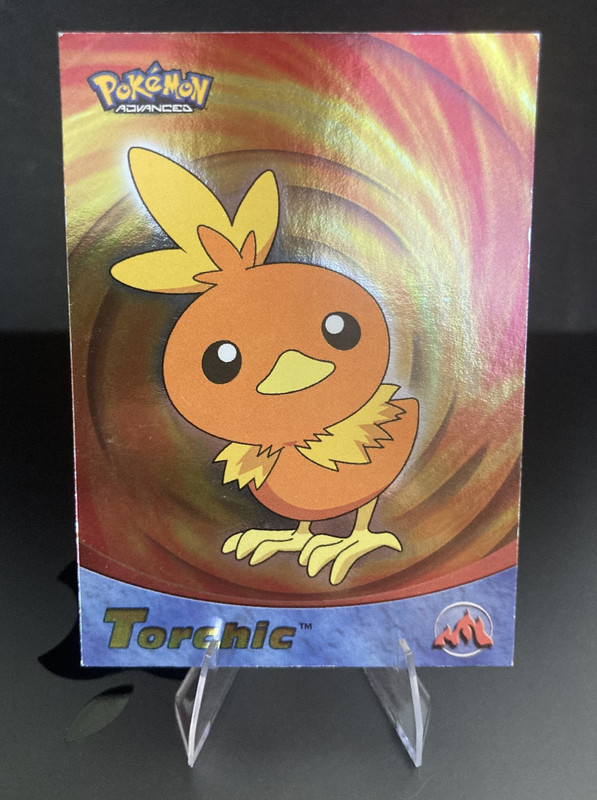
Top 10 Most Valuable 2003 Topps Advanced Pokemon Cards (2026)
Explore the most valuable 2003 Topps Advanced Pokemon cards. See the top 10 ranked by raw price, from Torchic at $178.78 to Gardevoir at $64.00. Discover investment opportunities.

Best 2003 Topps Advanced Pokemon Cards Under $25 (2026 Budget Guide)
Real eBay sold comps on 10 2003 Topps Advanced Pokemon cards under $25. Which picks have upside, which to skip.

Top 10 Most Valuable 2001 Topps Johto Sticker Pokemon Cards (2026)
Discover the top 10 most valuable 2001 Topps Johto Sticker Pokemon cards. Lugia leads at $257.56 raw! Learn investment strategies.

Is 2001 Topps Johto Pokemon Worth Collecting? 2026 Investment Review
Full 2001 Topps Johto Pokemon set review — release context, 8 chase cards, grading ROI math, and a buy / watch / skip verdict.

Best 2001 Topps Johto Sticker Pokemon Cards Under $25 (2026 Budget Guide)
Real eBay sold comps on 10 2001 Topps Johto Sticker Pokemon cards under $25. Which picks have upside, which to skip.
Top 10 Most Valuable 2001 Topps Johto Pokemon Cards (2026)
Discover the top 10 most valuable 2001 Topps Johto Pokemon cards in 2026, with Azumarill [Holo] at $440.00 raw. Your collector's guide!
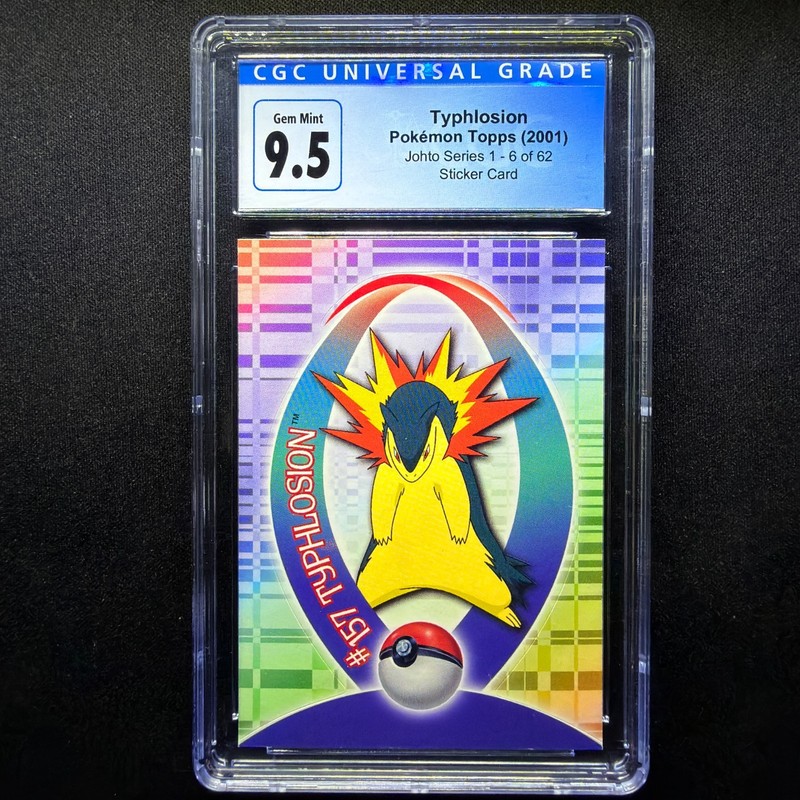
Best 2001 Topps Johto Pokemon Cards Under $25 (2026 Budget Guide)
Real eBay sold comps on 10 2001 Topps Johto Pokemon cards under $25. Which picks have upside, which to skip.

Blaziken VMAX #201 Pokemon Chilling Reign: Should You Grade It? PSA 10 ROI 2026
Real ROI math on grading Blaziken VMAX #201 from Pokemon Chilling Reign. PSA 10 vs raw prices, break-even analysis, multi-grader comparison.

Charizard V #79 Pokemon Champion's Path: Should You Grade It? PSA 10 ROI 2026
Real ROI math on grading Charizard V #79 from Pokemon Champion's Path. PSA 10 vs raw prices, break-even analysis, multi-grader comparison.

Charizard V #154 Pokemon Brilliant Stars: Should You Grade It? PSA 10 ROI 2026
Real ROI math on grading Charizard V #154 from Pokemon Brilliant Stars. PSA 10 vs raw prices, break-even analysis, multi-grader comparison.

Tyranitar V #155 Pokemon Battle Styles: Should You Grade It? PSA 10 ROI 2026
Real ROI math on grading Tyranitar V #155 from Pokemon Battle Styles. PSA 10 vs raw prices, break-even analysis, multi-grader comparison.
Ready to get serious about Pokemon investing? Start with a specific set breakdown from our cluster guides above, or jump straight to our grading ROI deep dive to run the math on a card you’re thinking about sending in. Every article on this site cites real data, real sources, and real transaction counts — no guesswork.