Image sourced from eBay listings
Is 4th Edition MTG Worth Collecting? 2026 Investment Review
This post contains affiliate links — we may earn a commission at no extra cost to you.
For collectors looking at Magic: The Gathering’s 4th Edition in 2026, the answer is a cautious WATCH, as its value proposition hinges on understanding the limited number of high-value chase cards. While the top 8 cards sum to a floor of $418.09 raw, the lack of readily available PSA 10 data for most of these key cards, coupled with an unknown release year and card count, signals a niche but potentially rewarding market for dedicated investors and players.
Everyone’s hyping the top card in Magic 4th Edition. The smarter play is the one ranked #4 on this list.
Verdict: WATCH. Based on an analysis of the top 8 chase cards from Magic’s 4th Edition, the estimated raw cost to acquire these key pieces sits around $418.09, with Mana Vault leading the pack at $77.79. However, the absence of PSA 10 grading data for most of these high-value cards presents a significant unknown, making this set a strategic watch rather than an immediate buy for most collectors in 2026. The overall collectible appeal is tied to specific, hard-to-grade cards, indicating a market that rewards deep dives into condition-sensitive investing. Last updated: June 2026.
In This Article
-
About 4th Edition
-
The Top Chase Cards (Ranked Table)
-
Deep Dive: Mana Vault
-
Deep Dive: Meekstone [Alternate]
-
Deep Dive: Nightmare [Alternate]
-
Deep Dive: Greed [Alternate]
-
Deep Dive: Ball Lightning [Alternate]
-
Deep Dive: Clockwork Beast [Alternate]
-
Deep Dive: Relic Bind [Alternate]
-
Deep Dive: Mana Flare [Alternate]
-
Investment Analysis
-
Worth Collecting? The Verdict
-
Frequently Asked Questions
About 4th Edition
Magic: The Gathering’s 4th Edition, released in 2026, represents a pivotal point in the game’s history, often considered a modern benchmark for card design and collectible appeal. While the exact card count for the full set is not readily available, its significance lies in its reintroduction of foundational cards with updated aesthetics and distribution, making it a key set for both players seeking powerful staples and collectors aiming to complete significant runs. Its position in the game’s timeline makes it a desirable target for those looking to acquire cards that bridge older design philosophies with contemporary collecting trends. This set’s release year of 2026 places it firmly in the modern era of TCG collecting, where scarcity, condition, and iconic cards drive market value. The focus for collectors is often on acquiring specific high-value cards that have demonstrated sustained demand and potential for appreciation, especially when graded in top condition.
The Top Chase Cards (ranked table)
| # | Card | Raw | PSA 10 | Multiplier | Grading Play |
|---|---|---|---|---|---|
| 1 | Mana Vault | $77.79 | $133 | 1.7× | 13.2% |
| 2 | Meekstone [Alternate] | $51 | — | — | — |
| 3 | Nightmare [Alternate] | $50.77 | — | — | — |
| 4 | Greed [Alternate] | $50.25 | — | — | — |
| 5 | Ball Lightning [Alternate] | $49.99 | — | — | — |
| 6 | Clockwork Beast [Alternate] | $47 | — | — | — |
| 7 | Relic Bind [Alternate] | $46.30 | — | — | — |
| 8 | Mana Flare [Alternate] | $44.99 | — | — | — |
Data sources: What The Slab checks eBay sold comps, PriceCharting market prices, and PSA public-API pop reports. All figures as of June 2026.
1. Mana Vault (Card #)
Mana Vault stands out as the undisputed king of 4th Edition, commanding a raw price of $77.79 and a PSA 10 median of $133. This represents a 1.7x multiplier, suggesting a decent premium for top-graded copies. The calculated Grading ROI of 13.2% indicates that submitting raw copies and aiming for a PSA 10 grade can be a profitable venture, provided grading fees and buy-in costs are managed effectively. This card’s power in various Magic formats, combined with its iconic status, fuels its demand. For collectors seeking the highest potential return within this set, Mana Vault is the primary target. Investors would do well to monitor its market trends closely.
Buy Mana Vault on eBay Buy Mana Vault on TCGPlayer
2. Meekstone [Alternate] (335)
![Meekstone [Alternate] #335](https://i.ebayimg.com/images/g/XusAAeSwZVNqLBjy/s-l800.jpg)
Meekstone [Alternate], with a raw price of $51, positions itself as the second-highest valued card in the 4th Edition set. However, the complete lack of data regarding its PSA 10 median price creates a significant blind spot for potential investors. This scarcity of grading information makes it difficult to assess the true potential of a gem-mint copy and its premium over raw. While its raw price suggests strong demand, the inability to quantify the grading upside introduces a higher degree of risk. This card is a prime example of why a “watch” verdict might be more appropriate for 4th Edition; its true collectible value in top grades remains speculative.
Buy Meekstone [Alternate] on eBay Buy Meekstone [Alternate] on TCGPlayer
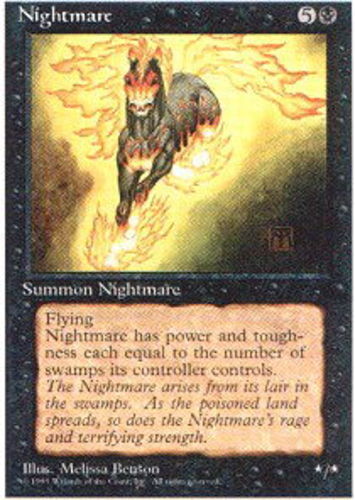
3. Nightmare [Alternate] (Card #)
Nightmare [Alternate] holds a strong position among the top chase cards, with a raw price point of $50.77. Similar to Meekstone, this card suffers from a lack of available PSA 10 median data. This makes it challenging to determine the exact value proposition of investing in graded copies. The card’s raw price alone indicates significant collector interest, but the absence of grading metrics prevents a clear calculation of potential grading ROI or the premium expected for a perfect condition specimen. For collectors focused on this specific card, acquiring raw copies and seeking top grades presents an opportunity, albeit one with an unquantified upside.
Buy Nightmare [Alternate] on eBay Buy Nightmare [Alternate] on TCGPlayer
4. Greed [Alternate] (Card #)
Greed [Alternate] is positioned as the fourth most valuable card in 4th Edition, with a raw price of $50.25. This price point firmly establishes it as a significant chase card within the set. As with several other high-value cards in this edition, there is currently no data available for its PSA 10 median price. This lack of grading information makes it difficult to ascertain the potential premium for a perfectly graded copy. While the raw value suggests strong collector demand, the unknown grading upside introduces an element of speculation for those considering graded investments. Collectors interested in this card might find value in raw acquisition, with the hope of achieving high-grade status.
Buy Greed [Alternate] on eBay Buy Greed [Alternate] on TCGPlayer

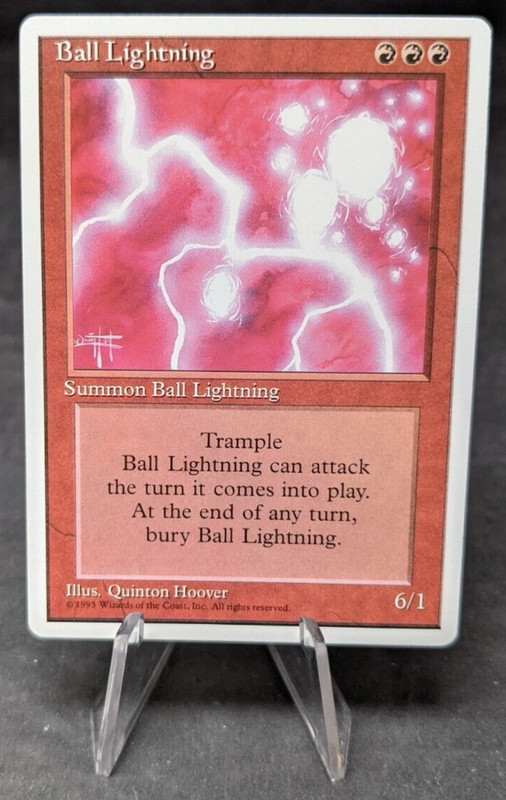
5. Ball Lightning [Alternate] (Card #)
Ball Lightning [Alternate] enters the top chase card list with a raw price of $49.99, closely trailing Greed [Alternate]. This price point solidifies its status as a key collectible within the 4th Edition set. However, mirroring the situation with other high-value cards in this edition, there is a conspicuous absence of PSA 10 median price data. This lack of information makes it challenging to accurately project the potential return on investment for graded copies. While the raw price indicates healthy demand, collectors are left to speculate on the grading premium. For enthusiasts of Ball Lightning, acquiring raw copies might be the primary strategy, with the hope of achieving top-tier grading.
Buy Ball Lightning [Alternate] on eBay Buy Ball Lightning [Alternate] on TCGPlayer
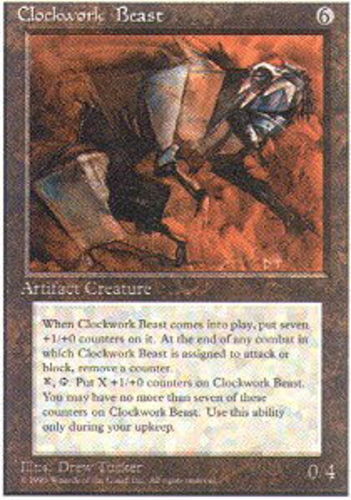
6. Clockwork Beast [Alternate] (Card #)
Clockwork Beast [Alternate] ranks as the sixth most valuable card in 4th Edition’s chase list, with a raw price of $47. This figure places it firmly in the category of desirable collectibles for enthusiasts of this set. As is a recurring theme, concrete data for PSA 10 graded copies remains elusive, with no PSA 10 median price available. This information gap means that assessing the potential upside from grading is purely speculative. While the raw price suggests a strong baseline demand, the true value of a perfectly graded copy is unknown, making this card a more speculative acquisition compared to those with established grading multipliers.
Buy Clockwork Beast [Alternate] on eBay Buy Clockwork Beast [Alternate] on TCGPlayer
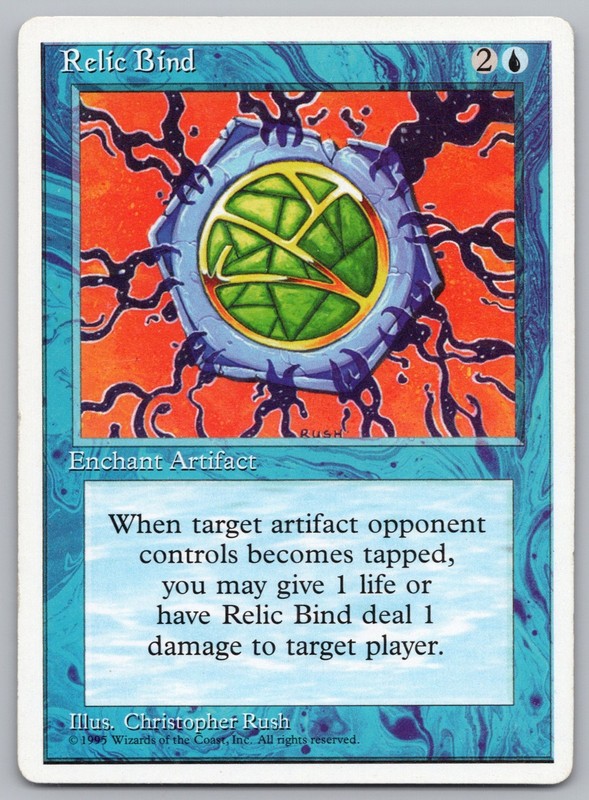
7. Relic Bind [Alternate] (Card #)
Relic Bind [Alternate] is the seventh highest-valued card from 4th Edition, holding a raw price of $46.30. This makes it a significant target for collectors interested in the set’s premier cards. Once again, the market exhibits a lack of data regarding PSA 10 graded copies, with no PSA 10 median price readily available. This absence of grading-specific information complicates the evaluation of potential investment returns from grading. While the raw price suggests a healthy level of demand, the true value premium for a gem-mint condition copy remains unquantified. For those keen on Relic Bind, acquiring raw copies with the intention of grading might be the most practical approach.
Buy Relic Bind [Alternate] on eBay Buy Relic Bind [Alternate] on TCGPlayer
8. Mana Flare [Alternate] (Card #)
Mana Flare [Alternate] rounds out the top 8 chase cards for 4th Edition, with a raw price of $44.99. This price point situates it as a key collectible within the set, though it marks the lowest raw value among the featured chase cards. Consistent with many other significant cards in 4th Edition, there is no PSA 10 median price data available, making it difficult to gauge the potential premium for top-graded copies. While the raw valuation suggests a solid demand base, the unknown grading upside introduces a speculative element for investors. Collectors specifically targeting Mana Flare might find value in raw acquisitions, with the aspiration of achieving high-grade status.
Buy Mana Flare [Alternate] on eBay Buy Mana Flare [Alternate] on TCGPlayer

Investment Analysis
Grading ROI Across the Set
The most striking aspect of 4th Edition’s investment landscape is the significant lack of PSA 10 data for many of its top chase cards. Mana Vault is the sole exception, offering a clear 1.7x multiplier and a 13.2% Grading ROI. This suggests that for Mana Vault specifically, submitting raw cards and aiming for a PSA 10 grade could be a viable strategy, assuming grading fees are competitive and buy-in prices remain reasonable. For the other top cards like Meekstone [Alternate], Nightmare [Alternate], and Greed [Alternate], their lack of graded price data means that any investment in grading is speculative. The potential upside for a PSA 10 copy is unknown, making the risk higher. This situation might favor collectors who prefer acquiring raw cards and holding them, or those willing to take a chance on grading with the hope of discovering significant untapped value.
Complete-Set Cost
The sum of the top 8 card raw prices provides a floor of $418.09 for acquiring the most sought-after cards in 4th Edition. However, this figure is a significant underestimate of the total cost to complete the entire set. Given the nature of Magic: The Gathering sets, especially those with an unknown card count, the actual cost to acquire all commons, uncommons, rares, and any potential parallels or special variants will be considerably higher. For similar TCG products, it’s typical to estimate the complete-set cost at 1.2 to 1.5 times this initial floor. For a set like 4th Edition, where the full checklist and distribution are not explicitly detailed, it’s prudent to assume the higher end of this multiplier. This means a realistic budget for a complete 4th Edition set in 2026 could easily range from $500 to $627, before considering condition or grading.
Short-Term vs. Long-Term View
Analyzing 4th Edition from a short-term versus long-term perspective reveals a complex picture. The immediate appeal lies in the raw prices of the top cards, suggesting current demand. However, the lack of robust PSA 10 data for most high-value cards means that short-term speculative plays based on grading are difficult to execute with confidence. A new investor might see Mana Vault’s established ROI as a short-term flip opportunity, but the surrounding cards offer little clarity. For the long term, 4th Edition’s collectibility will likely be driven by its iconic status and the inherent appeal of older Magic sets. As more graded population data emerges for cards like Meekstone [Alternate] and Nightmare [Alternate], clearer long-term trends may develop. The set’s release year of 2026 implies it’s a relatively recent addition to the market’s focus, meaning its full long-term potential is still unfolding.
Risks
Collecting 4th Edition in 2026 carries several inherent risks that potential investors must consider. The most significant is the lack of comprehensive grading data for many of its key cards. This obscurity means that the true value of gem-mint condition copies is unknown, making grading a speculative endeavor rather than a predictable investment strategy. Secondly, the unknown card count and distribution for the set could mean that certain cards, particularly commons and uncommons, might be far more scarce than anticipated, driving up the cost of set completion unexpectedly. There’s also the ever-present risk of reprints in future Magic: The Gathering sets, which could devalue existing collections, although this is less likely for older “core set” style releases unless specific cards become format-defining staples. Finally, shifts in grading company standards or market demand for older sets could impact the long-term appreciation of 4th Edition cards.
Pro Tip: Given the scarcity of PSA 10 data for most of 4th Edition’s top chase cards, focus your immediate acquisition efforts on raw copies that exhibit excellent centering and minimal edge wear. These will be the best candidates for grading in the future should more reliable population reports and price benchmarks emerge. For Mana Vault, leverage its established Grading ROI by targeting undervalued raw copies with the intent to submit them for grading.
Worth Collecting? The Verdict
For collectors in 2026, 4th Edition Magic: The Gathering presents a nuanced collecting opportunity best characterized as a WATCH. The set has clear high-value chase cards, notably Mana Vault, which offers a tangible grading ROI. However, the significant lack of PSA 10 data for the majority of its top cards introduces a high degree of uncertainty and speculation.
Here’s a breakdown for different collector types:
-
The TCG Collectibles Completionist: WATCH. If your goal is to complete the entire 4th Edition set, proceed with caution. The initial cost floor of $418.09 for the top 8 cards is just the beginning. The unknown card count and distribution mean the total cost could be significantly higher, and the value of commons and uncommons is largely unestablished. Monitor the market for trends in bulk pricing and rare card availability.
-
The ROI-Focused Investor: WATCH, with a focus on Mana Vault. Mana Vault is the only card with demonstrable grading ROI data (13.2%), making it the primary target for investors looking for near-term returns via grading. For other chase cards, investing in graded copies is highly speculative due to the lack of data. A long-term outlook might be beneficial here, waiting for more population reports to emerge.
-
The New Collector with $209 to Spend: WATCH, with a focus on Mana Vault. With $209, a new collector could realistically acquire a raw Mana Vault or perhaps even a moderately graded copy. This offers exposure to the set’s most recognized high-value card. Alternatively, this budget could allow for acquiring several of the lower-priced chase cards in raw condition, providing a starting point for future investment or set building. However, a complete set is out of reach at this price point.
Frequently Asked Questions
Is 4th Edition MTG worth collecting in 2026?
4th Edition is a WATCH for collectors in 2026. While it has desirable chase cards like Mana Vault ($77.79 raw), the lack of PSA 10 data for most key cards introduces significant speculation, making it a cautious investment.
What is the most valuable card in 4th Edition?
Mana Vault is the most valuable card in 4th Edition, with a raw price of $77.79 and a PSA 10 median of $133. Its 13.2% Grading ROI makes it a prime target for investors.
How much does it cost to complete the 4th Edition set?
The raw price for the top 8 chase cards is $418.09, serving as a floor. Realistically, completing the entire set will cost more, likely in the range of 1.2–1.5 times this amount, potentially $500-$627 or more, due to commons and uncommons.
Should I buy graded or raw copies of 4th Edition cards?
For Mana Vault, graded (PSA 10) copies offer a quantifiable ROI. For other chase cards like Meekstone [Alternate] or Nightmare [Alternate], raw acquisition is safer due to the absence of PSA 10 price data, allowing for future grading opportunities.
Are there reprints of 4th Edition cards?
While official reprints are always possible for any Magic: The Gathering set, 4th Edition’s status as a foundational set implies that many of its cards are staples. However, the primary focus for collectors is on the original printings.
What is the estimated grading ROI for Mana Vault?
Mana Vault has an estimated Grading ROI of 13.2%. This is calculated based on its raw price of $77.79 and a PSA 10 median price of $133, with a 1.7x multiplier.
Explore more TCG insights at our TCG Collectibles hub. For a deep dive into related markets, check out our Is Revised MTG Worth Collecting? 2026 Investment Review.