How to Ship Sports Cards Safely: The Ultimate Collector's Guide
This post contains affiliate links. We may earn a commission at no extra cost to you.
Sports cards can be shipped safely using a Plain White Envelope (PWE) for cards valued under $20 or a Bubble Mailer With Tracking (BMWT) for cards valued at $20 and above. Both methods require sleeving, toploading, and team bagging cards, then protecting them with a cardboard sandwich. BMWT adds cushioning and uses a padded mailer with USPS Ground Advantage.
In today’s booming sports card market, safe shipping isn’t just a best practice; it’s non-negotiable. With nearly 39% of all card exchanges happening on digital marketplaces, and the global market projected to hit $23.64 billion by 2034, there’s more value (and risk) in transit than ever before. We’re talking about a hobby where a single basketball autograph can fetch premium prices, and an unmolested soccer rookie can make or break a sale.
This section discusses the protection of cards and a seller’s reputation.
Why Safe Sports Card Shipping Matters Now More Than Ever
The sports card market is hotter than ever, with 45% of millennials and 52% of Gen Z consistently buying. This surge in popularity means more cards are changing hands, often over significant distances. But with great growth comes great responsibility - and new challenges.
As of early 2026, we’re navigating a complex environment:
-
Rising Costs: Shipping and packaging expenses have soared by 24-31% over the past two years, directly impacting our bottom lines.
-
Increased Theft Concerns: There’s a growing, alarming trend of package theft, particularly for high-value cards destined for grading services. These known addresses, unfortunately, can become targets.
-
USPS Rate Adjustments: The July 2025 USPS rate hikes have changed the game, forcing us to re-evaluate our shipping strategies.
Careful shipping practices are essential for preventing damage, mitigating financial loss, and protecting assets.
PWE vs. BMWT: Choosing the Right Method for Your Cards

The first decision in any shipping endeavor is choosing the right service. For sports cards, this usually boils down to two main options: Plain White Envelope (PWE) or Bubble Mailer With Tracking (BMWT).
Plain White Envelope (PWE): The Budget Option (Under $20)
For cards generally valued under $20, a PWE can be a cost-effective solution, especially for casual sales or low-end trades. However, this method comes with significant caveats.
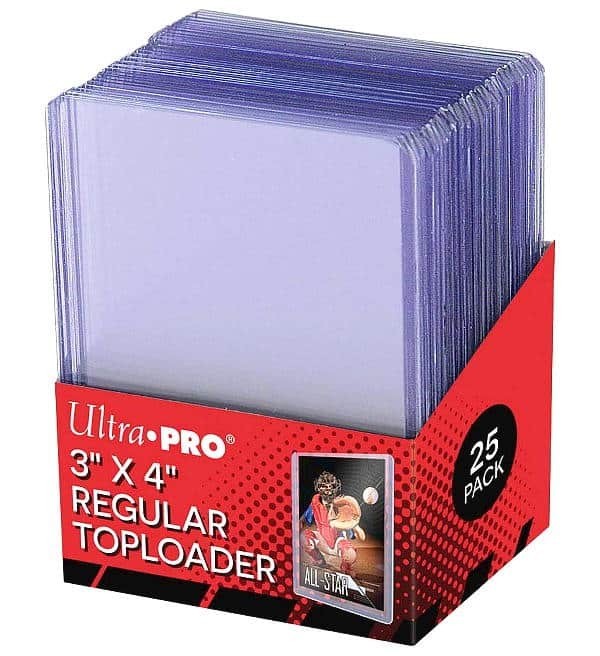
Community Standard for PWE: 1. Sleeve & Topload: Always, always, always put your raw card in a Ultra Pro Penny Sleeves 100 Count first to prevent surface scratches, then slide it into a Ultra Pro 3x4 Regular Toploaders 25 Count. This is non-negotiable. 2. Team Bag: Place the sleeved and toploaded card into a Ultra Pro Team Bags and seal it. Use a small piece of painter’s tape across the opening of the team bag to prevent the card from slipping out, being careful not to let the tape touch the card itself. 3. Cardboard Sandwich: Cut two pieces of rigid cardboard (cereal box thickness or slightly thicker is good) slightly larger than the toploader. Tape the toploader sandwich between these pieces using painter’s tape on the edges to prevent movement. 4. Envelope & Labeling: Slide the entire assembly into a standard #10 envelope. Crucially, mark the envelope “NON-MACHINABLE” and apply the appropriate non-machinable surcharge stamp in addition to your regular postage. This is supposed to ensure manual sorting, reducing the risk of your card getting chewed up by postal machines.
PWE Concerns: Despite following best practices, the community reports inconsistencies. Sometimes, PWEs are returned for “insufficient postage” even when adhering to thickness and weight limits (not exceeding 1/4 inch thick or 3 ounces). Other times, buyers might face unexpected charges. It’s a gamble, and for anything you truly care about, it’s often not worth the risk.
Bubble Mailer With Tracking (BMWT): The Gold Standard (Over $20)
For cards valued at $20 and above, BMWT is the undisputed choice. The added protection and, most importantly, tracking, provide peace of mind for both buyer and seller.
Community Standard for BMWT: 1. Sleeve & Topload/Semi-Rigid: Same as PWE: Ultra Pro Penny Sleeves 100 Count followed by a Ultra Pro 3x4 Regular Toploaders 25 Count. If you’re shipping a card destined for a grading submission, consider using PJU Semi-Rigid Card Holders, as these are often preferred by grading companies for their rigidity and ease of removal. 2. Team Bag: Secure the card in a Ultra Pro Team Bags, taped shut as described above. 3. Rigid Protection: Create a sturdy cardboard sandwich around the toploaded card. For higher value cards, double up on the cardboard or use thicker, corrugated pieces to prevent bending. 4. Cushioning: Wrap the cardboard-protected card in bubble wrap or place it inside a small bubble cushion pouch. The goal is to fill any empty space within the mailer to prevent shifting. Some collectors even tape the card sandwich to the inside wall of the bubble mailer with painter’s tape for extra security. 5. Padded Mailer: Place the entire package into a padded or bubble mailer. 6. Shipping Service: USPS Ground Advantage is a popular choice for BMWT due to its balance of cost and tracking. Insurance is highly recommended for cards over $100.
Step-by-Step Packaging: From Penny Sleeves to Double-Boxing
Let’s get down to the granular details of packaging, from the simplest single card to the most valuable slabs.
Protecting Your Raw Cards (The Foundation)
Every raw card you ship, regardless of value, needs this basic protection:
-
The Penny Sleeve: This is your first line of defense against surface scratches. Keep raw cards in Ultra Pro Penny Sleeves 100 Count before grading – they’re cheap and protect centering.
-
The Toploader (or Semi-Rigid): Once sleeved, the card goes into a rigid holder. For general shipping, a Ultra Pro 3x4 Regular Toploaders 25 Count is standard. For grading submissions (especially for PSA), use PJU Semi-Rigid Card Holders as they are thicker and prevent warping during transit, which can ding your centering score.
-
The Team Bag: Seal the sleeved and top-loaded card in a Ultra Pro Team Bags. This prevents the card from slipping out of the toploader and adds another layer of moisture and dust protection. A small strip of painter’s tape over the opening is a good measure, but ensure it doesn’t stick to the card itself.
Reinforcing for Transit (BMWT and Beyond)
Once your card is sleeved, top-loaded, and team-bagged: 1. Cardboard Armor: Sandwich your protected card between two pieces of thick, rigid cardboard. Use painter’s tape to secure the cardboard pieces together around the toploader, creating a snug fit. This prevents bending and adds crucial impact protection. 2. Cushioning: For BMWT, wrap the cardboard-encased card in bubble wrap or place it in a small bubble pouch. This adds shock absorption. Place it into a padded mailer. 3. Prevent Movement: The key is to eliminate any “dead space” inside your mailer. Use extra bubble wrap, crumpled packing paper, or even another piece of cardboard to ensure the card can’t slide around. Movement equals friction, and friction equals potential damage.
Double-Boxing: The Fortress for High-Value Slabs
For cards over $500, or especially those in the $1000+ range (whether raw or already graded into slabs), double-boxing is the ultimate protection against crushing and theft.
- Inner Box: Place your thoroughly packaged card (sleeved, toploaded, cardboard-reinforced, and potentially bubble-wrapped) into a small, sturdy box that provides a snug fit. Fill any remaining space with packing peanuts or crumpled paper.
- Outer Box: Place this inner box into a larger shipping box. The space between the inner and outer box should be generously filled with packing peanuts, bubble wrap, or air pillows. The goal is to create a crush-resistant zone around your valuable card. Think of it as an airbag system for your slab.
- Secure Closure: Use heavy-duty packing tape to seal all seams of the outer box.
Navigating Rising Shipping Costs: USPS Rate Adjustments & Smart Savings
The reality of shipping costs is that they’re going up, and we, as collectors and sellers, need to adapt. The USPS rate adjustments that took effect in July 2025 significantly impact how we ship.
-
Priority Mail: Saw an average increase of 6.3%. While very light packages might see minor decreases in lower zones, most shipments will cost more. A 1-pound Priority Mail package to Zone 1 now costs around $7.95, up from $7.50.
-
USPS Ground Advantage: This workhorse service saw an even steeper average increase of 7.1%. A 1-pound Ground Advantage package to Zone 1 is now about $5.85, up from $5.50.
-
First-Class Package Service (Retail): Rates for packages up to 4 ounces increased by roughly 7%, with even a 1-ounce package seeing a 25-cent hike.
-
eBay Standard Envelope: Though eBay negotiates rates, these USPS increases have led to slight bumps. A 1-ounce card is up by at least five cents, with 2-ounce shipments now $1.03 and 3-ounce shipments around $1.30.
-
Certified Mail: Used for valuable items requiring proof of delivery, costs are up. Expect to pay around $10.44 for a 1-ounce First-Class letter with Certified Mail and a Retail Return Receipt.
-
Nonstandard Fees: Watch out for these! Packages exceeding certain dimensions now incur surcharges: $4 for 22-30 inches on the longest side, and $15 for over 30 inches. Incorrect dimensions can also cost you $1.50.
COMC Fee Adjustments: If you use COMC, be aware that as of March 12, 2026, their per-item shipping and handling fees increased significantly: Standard Trading Cards from $0.25 to $0.50, Toploaded & Jumbo Cards from $0.45 to $1.00, and Graded Cards from $1.00 to $2.00. Factor this into your sales strategy!
Smart Savings Strategies:
-
Utilize Online Postage: Always buy your postage online through platforms like eBay’s shipping labels or PirateShip. You’ll get discounted commercial rates compared to retail USPS prices, often saving you significant money over time.
-
Weigh Accurately: Invest in a digital scale. Every ounce matters. An inaccurate weight can lead to a return, delays, or charges to your buyer.
-
Mind Your Dimensions: Avoid those new nonstandard fees by keeping your packages within standard limits.
-
Bundle Sales: Encourage buyers to purchase multiple cards to combine shipping costs, making each individual card’s shipping expense more palatable.
Securing High-Value Cards: Insurance, Signature & Theft Prevention
When you’re shipping a card valued at hundreds or thousands, the game changes. This isn’t just about packaging; it’s about risk management.
Insurance: Your Safety Net
For cards over $100, insurance is practically mandatory. For anything over $500, it’s non-negotiable. While USPS offers insurance, there are considerations. The good news? USPS insurance rates saw a 12% reduction in July 2025, which helps.
Collector Tip:
For high-value PSA submissions, consider third-party insurance. It adds an extra layer of discretion and can offer more tailored coverage for collectibles than standard postal insurance.
Signature Confirmation: Proof of Delivery
For valuable cards, always require Signature Confirmation. This confirms that the package was received by an actual person at the designated address, providing crucial proof of delivery in case of a dispute.
Theft Prevention: Staying One Step Ahead
The increasing concern over card theft during transit, particularly to and from grading services, highlights the need for vigilance.
-
Discretion: Avoid overtly labeling packages as containing “sports cards” or “collectibles.”
-
Tracking: Always use a service with robust tracking.
-
Third-Party Insurance: Some collectors prefer third-party insurers like CollectSure. The rationale is that relying solely on postal insurance might inadvertently flag a package as high-value, making it a target. Third-party insurance keeps the value details separate from the carrier.
-
Double-Boxing: As mentioned, this isn’t just for crushing; it creates a more unassuming package that’s harder to tamper with discreetly.
Here’s a quick comparison to help you weigh your insurance options:
| Feature | USPS Insurance | Third-Party Insurance (e.g., CollectSure) |
|---|---|---|
| Availability | Directly at USPS, online postage providers | Specialized providers (often online), some integrated with marketplaces |
| Cost | Varies by declared value; saw 12% reduction (Jul 2025). | Can be very competitive for high values. Often transparent pricing structures. |
| Claim Process | Can be lengthy; requires extensive documentation and carrier investigation. | Often streamlined, designed specifically for collectibles. May require specific photos/proof of value. |
| Coverage Scope | Covers loss or damage. Max limits vary by service and can be low for certain items. | Often covers loss, damage, and sometimes even theft (check policy specifics). Can have higher, more flexible limits. |
| Disclosure Risk | Declaring high value directly to USPS might inadvertently flag package as high-value. | Value declaration is with the insurer, separate from the carrier, potentially reducing “target” risk. |
| Recommended For | Cards under $500, or when simplicity and direct postal integration are priorities. | Cards over $500-$1000+, high-volume sellers, or those seeking specific, comprehensive collector coverage and discretion. |
Community Pro Tips: Avoiding Common Shipping Pitfalls
Beyond the step-by-step, here are some nuggets of wisdom from the “What The Slab” community:
-
Always Use PayPal Goods & Services: For buyer and seller protection, always conduct transactions through PayPal Goods & Services. Never use “Friends & Family” for card sales.
-
Photos, Photos, Photos: Document your packaging process, especially for valuable cards. Take photos or even a short video of the card’s condition before packaging, and then of the packed item. This can be invaluable in case of a dispute.
-
Double-Check Addresses: A simple mistake in a street number or zip code can lead to a lost package or a costly return. Verify the shipping address with your buyer.
-
Seal Everything Tight: Use good quality packing tape (not Scotch tape) to seal all openings on mailers and boxes. Pay attention to seams.
-
Know Your Comps: When insuring a card, you need to know its market value. Check recent sales (comps) on eBay, 130point, or other marketplaces to determine an accurate insurance value.
Shipping sports cards safely requires attention to detail, a bit of investment, and staying updated on market and postal changes. But by following these guidelines, you can ensure your treasured cards reach their destination in the same condition they left your hands, protecting your hobby and your investments.
Ready to send your next slab, raw card, or full set out into the world with confidence? By implementing these expert strategies, you’re not just sending a package; you’re delivering peace of mind.